
Alberta’s extreme weather creates predictable patterns in how homeowners search for contractors. When a furnace fails at minus 30 or a roof leaks after spring thaw, people turn to Google immediately. Seasonal SEO planning helps you appear exactly when these high-intent searches happen, capturing leads during peak demand periods.
Contractors who plan their SEO strategy around Alberta’s seasonal cycles consistently outperform competitors who take a generic approach. By aligning your content, keywords, and optimization efforts with when people actually need your services, you maximize visibility during the moments that matter most for your business.
Why Seasonal SEO Planning Matters for Alberta Home Service Contractors
Alberta’s climate isn’t just extreme—it’s predictable. This predictability creates distinct windows when homeowners actively search for specific services. A Calgary homeowner thinking about furnace maintenance in September behaves very differently from one searching for emergency heating repair in January.
Search behavior follows these weather patterns closely. Google search volume for “furnace repair Calgary” increases by 300% between October and March compared to summer months. Similarly, “roof repair Edmonton” searches spike 250% in April and May as homeowners assess winter damage.
Anticipating these trends positions you ahead of competitors still running the same campaigns year-round. When you publish winterization content in August, it ranks and builds authority before the September search surge begins. Competitors scrambling to create content in October start from zero visibility.
Weather patterns directly correlate with service demand and search volume. A week of minus 40 temperatures triggers emergency service searches. A sudden spring warm-up brings roofing and exterior repair queries. Planning around these patterns means your content appears when search intent is highest and conversion rates peak.
Understanding Alberta’s Seasonal Demand Cycles for Home Services
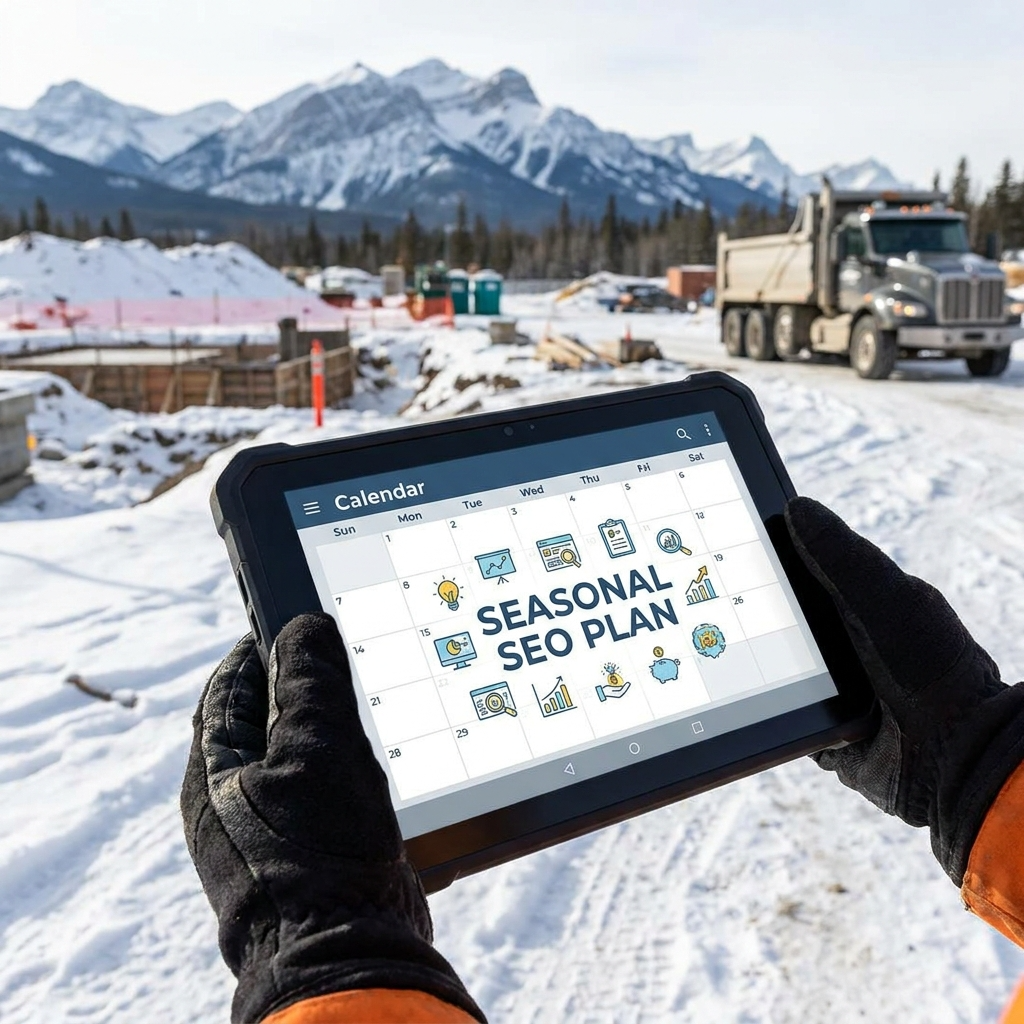
Every trade experiences seasonal fluctuations, but timing and intensity vary significantly. Knowing your specific peak periods helps you allocate resources effectively and maximize ROI from SEO investments.
Winter Peak Season: Furnace, HVAC, and Emergency Services
October through March represents the critical period for heating-related services across Alberta. Search volume for furnace repair, HVAC maintenance, and emergency heating services peaks during this window, with extreme spikes during cold snaps.
Emergency service opportunities multiply when temperatures drop below minus 25. Homeowners facing heating failures search immediately, often from mobile devices, looking for 24-hour service providers. Your SEO strategy should prioritize mobile optimization and emergency-focused content during these periods.
Content strategies for winter should include preventative maintenance guides published in early fall, emergency response pages optimized for urgent queries, and educational resources about system efficiency. Case studies showing successful emergency responses build trust with anxious searchers.
Spring Rush: Restoration, Roofing, and Exterior Services
April through June brings the spring demand surge as homeowners emerge from winter and assess damage. Roof inspections, exterior repairs, restoration services, and foundation work dominate search queries during this period.
Post-winter inspection searches begin in March as temperatures moderate. Homeowners search for damage assessment services before committing to repairs. Content addressing common winter damage types and inspection processes captures early-stage leads.
Timing content publication for maximum impact means having comprehensive spring service pages live by February. This gives Google time to index and rank your content before the April search volume spike. Video content showing common winter damage signs performs particularly well during this window.
Summer High Season: Landscaping, Renovations, and Construction
Summer represents peak activity for outdoor projects, renovations, and construction work. Homeowners plan major improvements during vacation time when they can oversee projects or be away while work happens.
Vacation-time home improvement planning searches begin in April and May. People research contractors, compare services, and gather quotes before committing to summer projects. Long-form content addressing project planning, timelines, and cost considerations captures these early researchers.
Long-term project keyword targeting should focus on high-value terms like “kitchen renovation Calgary” or “backyard landscaping Edmonton.” These queries indicate serious buying intent and justify the longer sales cycles typical of major projects.
Fall Preparation: Maintenance and Winterization Services
September through November creates a window for preventative service searches. Homeowners prepare for winter by scheduling maintenance, winterization, and proactive repairs to avoid emergency situations.
Educational content opportunities around winter preparation perform exceptionally well during fall. How-to guides, preparation checklists, and maintenance schedules position you as a helpful resource rather than just a service provider. This builds authority and trust.
Proactive guidance establishes expertise in your field. When homeowners see you educating them about preventing problems rather than just fixing them, they view your business as more trustworthy and are more likely to choose you when service needs arise.
Building Your Year-Round Seasonal SEO Content Calendar
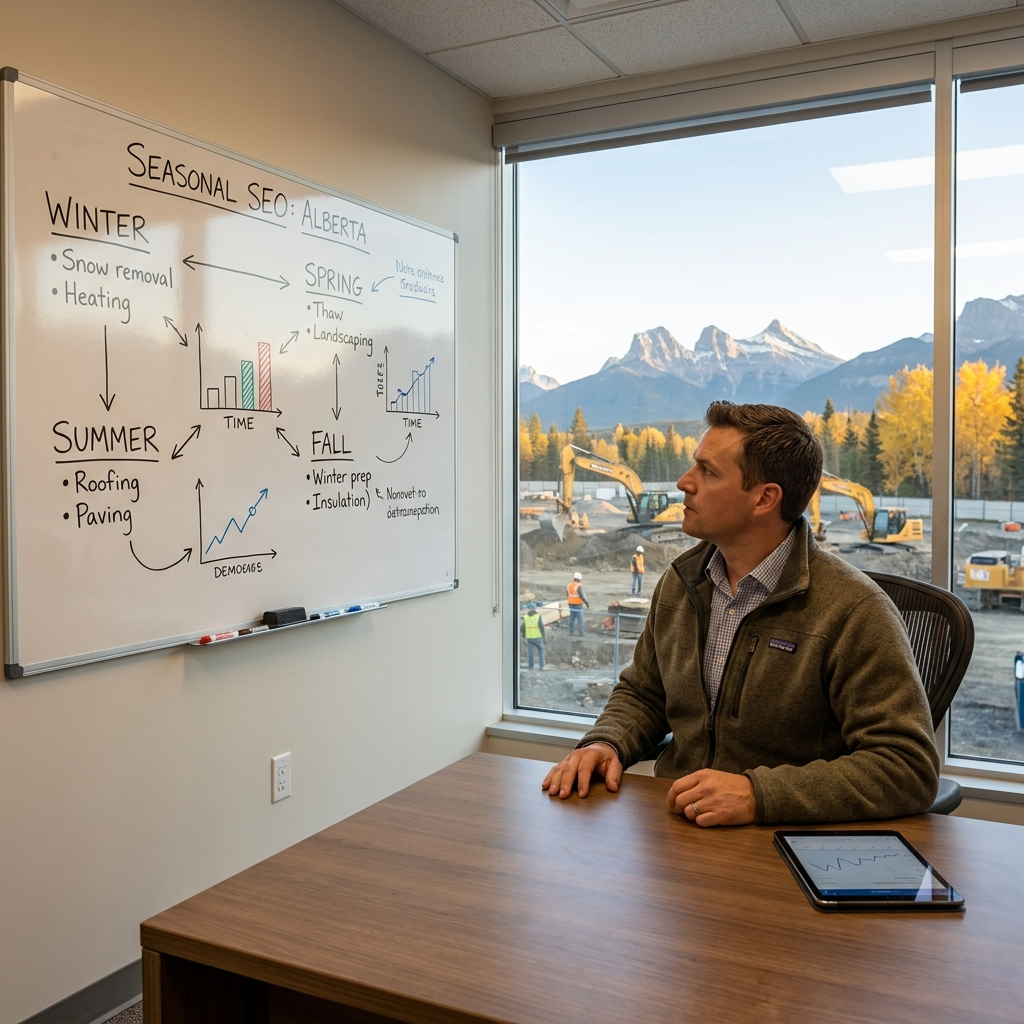
Successful seasonal SEO requires planning content 8 to 12 weeks before peak demand periods. This advance timeline gives Google sufficient time to crawl, index, and rank your pages before search volume increases.
Layering evergreen and seasonal content strategically maximizes year-round visibility. Evergreen content like “How to Choose a Contractor” stays relevant continuously, while seasonal pieces like “Preparing Your Furnace for Winter” target specific timeframes. Both work together to maintain consistent traffic.
Creating pillar content that supports seasonal campaigns establishes topical authority. A comprehensive guide to HVAC systems serves as your pillar, with seasonal articles about winter maintenance, summer efficiency, and emergency repairs linking back to it. This internal linking structure signals expertise to search engines.
Repurpose and update seasonal content annually rather than starting fresh. Last year’s winterization guide needs updated statistics and fresh examples, but the core information remains valuable. This approach saves time while maintaining content quality.
Track seasonal keyword performance year-over-year to identify trends and opportunities. Did “furnace maintenance Calgary” peak earlier this year? Did spring roofing searches extend longer? These insights refine next year’s calendar for better results.
Advanced Seasonal Keyword Research for Alberta Markets
Identifying seasonal keyword variations and modifiers separates successful campaigns from generic ones. “Furnace repair” performs differently than “emergency furnace repair,” “furnace not working,” or “furnace maintenance.” Each variation represents different search intent and seasonal patterns.
Analyze search volume trends using Google Trends and proprietary tools to identify when specific keywords gain traction. Google Trends shows relative search interest over time, revealing the exact weeks when terms like “air conditioning service” begin climbing in Alberta.
Location-specific seasonal terms differ between Calgary and Edmonton despite their proximity. Calgary’s chinooks create unique heating system stresses, while Edmonton’s consistently cold winters generate different search patterns. Research both markets separately for optimal results.
Long-tail seasonal keywords with high conversion potential often have lower competition. “Emergency furnace repair Calgary south” or “roof leak repair Edmonton after hail” target specific situations with strong buying intent. These phrases convert better than generic terms.
Voice search considerations matter increasingly for seasonal queries. People ask their phones “where can I get my furnace fixed today” rather than typing “furnace repair.” Structure content to answer these natural language questions directly.
Optimizing Technical SEO Elements for Seasonal Campaigns
Create dedicated seasonal landing pages with proper structure rather than forcing seasonal content into generic service pages. A page specifically about winter furnace maintenance outperforms a general HVAC page for seasonal searches.
Implement strategic internal linking between seasonal content to build topic clusters. Your fall furnace maintenance article should link to your emergency winter repair page, which connects to your spring system inspection content. This interconnected structure strengthens topical relevance.
Schema markup for seasonal services and special offers helps search engines understand your content context. Service schema, local business schema, and FAQ schema make your pages eligible for rich results that increase click-through rates.
URL structure best practices for seasonal pages balance specificity with longevity. Use URLs like “yoursite.com/furnace-maintenance” rather than “yoursite.com/fall-2024-furnace-maintenance.” The first can be updated annually; the second becomes outdated.
Mobile optimization for on-the-go seasonal searches is critical, especially for emergency services. When someone’s furnace fails at 11 PM, they’re searching from their phone. Fast loading, clear contact information, and easy navigation determine whether they call you or a competitor.
Leveraging Truth Protocol for Seasonal Search Dominance

The Truth Protocol methodology uses proprietary AI-powered systems to predict seasonal trends before they appear in standard tools. By analyzing historical patterns, weather forecasts, and market indicators, these systems identify emerging opportunities weeks ahead of competitors.
Automated content optimization adapts to changing seasonal demands in real time. When an unexpected cold snap hits, the system identifies increased emergency service searches and automatically prioritizes related content and keywords.
Real-time adjustments based on weather and market conditions give you competitive advantages during unpredictable events. A sudden hailstorm in June triggers immediate optimization for roofing and exterior damage keywords, capturing leads while competitors react manually.
Predictive seasonal analytics through Truth Protocol help you allocate budgets more effectively. Instead of spreading resources evenly across the year, you can invest heavily during predicted peak periods and maintain baseline efforts during slower seasons.
Content Types That Perform Best During Peak Seasons
Seasonal service guides and preparation checklists generate consistent traffic and establish expertise. A comprehensive spring home maintenance checklist becomes a resource homeowners bookmark and return to annually, building brand recognition.
Video content for visual seasonal demonstrations outperforms text-only pages for many services. Showing how to identify roof damage after winter or demonstrating proper furnace filter replacement creates engaging content that ranks well and converts effectively.
Case studies highlighting seasonal success stories build credibility with potential customers. A detailed account of how you handled 50 emergency furnace calls during a cold snap demonstrates capability and reliability better than generic service descriptions.
Emergency response content for urgent seasonal needs should prioritize speed and clarity. When someone searches for emergency help, they want immediate answers about availability, response time, and pricing. Structure this content for quick scanning.
FAQ pages addressing common seasonal concerns capture long-tail searches and voice queries. Questions like “Why does my furnace smell when I first turn it on” or “How do I know if I need a new roof after winter” match how people actually search.
Google Business Profile Optimization for Seasonal Visibility
Update services and descriptions for the current season to maintain relevance. Your Google Business Profile should highlight furnace services in winter and air conditioning in summer. These updates signal to Google what you’re currently focused on.
Seasonal post strategies drive engagement and visibility in local search results. Weekly posts about winter preparation tips, spring maintenance reminders, or summer project ideas keep your profile active and increase impressions.
Photo content showcasing seasonal work provides visual proof of expertise. Before-and-after photos of winter damage repairs or completed summer renovation projects build trust and encourage potential customers to choose your business.
Review generation campaigns during peak periods capture feedback when customer satisfaction is highest. After successfully completing emergency repairs or finishing a major summer project, request reviews while the positive experience is fresh.
Q&A optimization for seasonal questions helps you control the narrative. Proactively answer common seasonal questions in your Google Business Profile Q&A section rather than waiting for customers to ask. This positions you as helpful and knowledgeable.
Local Link Building Strategies for Seasonal Campaigns
Partner with local suppliers during peak seasons for mutual benefit. A joint content piece with a local HVAC parts supplier about choosing quality components builds backlinks while providing value to shared audiences.
Seasonal sponsorships and community involvement generate local links and brand awareness. Sponsoring a community winterization workshop or spring home show creates natural opportunities for local websites to link to your business.
Press releases for seasonal service launches reach local media outlets looking for relevant content. Announcing expanded emergency service hours for winter or new spring inspection packages gives local news sites reasons to cover and link to your business.
Local directory updates before demand surges ensure accurate information across the web. Verify your listings on industry directories, local business associations, and Alberta-specific platforms before peak seasons begin.
Paid Search Integration with Seasonal SEO Strategy

Coordinate organic and paid efforts for maximum visibility during peak periods. When your SEO content ranks well for seasonal terms, supplement with paid ads to dominate the entire first page of search results.
Budget allocation across seasonal peaks and valleys optimizes ROI. Invest heavily in paid search during your highest-demand months when conversion rates justify higher costs, then scale back during slower periods while maintaining organic visibility.
Remarketing strategies for seasonal shoppers capture people who visited during research phases but didn’t convert immediately. Someone who read your spring roofing guide in March might see your ads in April when they’re ready to hire.
Test seasonal messaging through PPC before scaling organically. Paid ads provide quick feedback about which headlines, offers, and calls-to-action resonate with seasonal searchers. Use these insights to optimize your organic content.
Measuring and Analyzing Seasonal SEO Performance
Key performance indicators for seasonal campaigns go beyond simple traffic metrics. Track conversion rates, lead quality, and revenue per lead to understand true campaign effectiveness.
Tracking tools and dashboards for real-time monitoring help you respond quickly to opportunities or problems. Set up custom reports showing seasonal keyword rankings, organic traffic by service category, and lead generation by season.
Year-over-year seasonal comparison metrics reveal trends and improvement opportunities. Did your spring campaign generate 20% more leads than last year? Did winter content rank higher this season? These comparisons guide future strategy.
ROI calculation for seasonal SEO investments justifies continued effort and budget allocation. Calculate the customer lifetime value of leads acquired during peak seasons versus other periods to identify your most profitable campaigns.
Attribution modeling for multi-touch seasonal journeys acknowledges that customers often interact with your content multiple times before converting. Someone might read your fall maintenance guide, then return during a winter emergency. Both touchpoints contributed to the conversion.
Preparing for Off-Season: Maintaining Momentum Year-Round
Content strategies during slower demand periods focus on building long-term authority rather than immediate lead generation. Use off-peak months to create comprehensive guides, industry thought leadership, and educational resources.
Build authority and backlinks in off-peak months when you have more time for outreach and relationship building. Guest posting, podcast interviews, and collaborative content projects strengthen your overall domain authority.
Diversify service offerings to balance seasonal fluctuations and maintain steadier revenue. HVAC contractors can emphasize air conditioning in summer, furnaces in winter, and indoor air quality year-round.
Nurture leads captured during peak seasons who weren’t ready to convert immediately. Email marketing, retargeting campaigns, and periodic check-ins keep your business top-of-mind for future needs.
Technical improvements and site audits during quieter periods prepare your website for the next peak season. Use downtime to fix technical issues, improve page speed, update content, and strengthen your SEO foundation.
Frequently Asked Questions
When should Alberta contractors start their seasonal SEO campaigns?
Start seasonal SEO campaigns 8 to 12 weeks before your peak demand period begins. For winter services, begin content creation and optimization in August. For spring services, start in January. This timeline allows search engines to index and rank your content before search volume increases.
What are the most important seasonal keywords for home service contractors in Calgary?
The most valuable seasonal keywords depend on your specific trade. For HVAC contractors, “furnace repair Calgary” and “emergency heating service” peak in winter. Roofing contractors should target “roof inspection Calgary” and “hail damage repair” in spring. Research your specific service category using Google Trends to identify your highest-value seasonal terms.
How far in advance should seasonal content be published for maximum impact?
Publish seasonal content at least 6 to 8 weeks before the season begins. This gives Google time to crawl and rank your pages. However, some evergreen seasonal content like “How to Prepare Your Home for Winter” can be published earlier and updated annually for continuous value.
Can seasonal SEO strategies work for emergency home services?
Yes, seasonal SEO works extremely well for emergency services because demand spikes are predictable. Emergency furnace repair searches surge during cold snaps. Emergency plumbing calls increase when temperatures drop below freezing. Optimize emergency service pages before peak seasons and ensure mobile optimization for on-the-go searches.
How does Answer Engine Optimization improve seasonal lead generation?
Answer Engine Optimization structures content to be easily understood and cited by AI systems like ChatGPT, Gemini, and Google’s AI Overviews. When your seasonal content directly answers specific questions with clear, authoritative information, AI engines cite you as a trusted source. This increases visibility beyond traditional search results.
What role does Google Business Profile play in seasonal search visibility?
Google Business Profile significantly impacts local seasonal visibility. Regular seasonal posts, updated service descriptions, and fresh photos signal relevance to Google. These elements improve your chances of appearing in the local map pack for seasonal searches, which drives high-quality leads.
How can contractors maintain SEO momentum during off-peak seasons?
Maintain momentum by creating evergreen content, building backlinks, conducting technical audits, and nurturing existing leads. Use slower periods to strengthen your overall SEO foundation so you’re better positioned when peak seasons return. Focus on educational content that builds long-term authority rather than immediate conversions.
Conclusion
Seasonal SEO planning transforms how Alberta home service contractors capture leads during peak demand periods. By aligning your content, keywords, and optimization efforts with Alberta’s predictable weather patterns, you appear exactly when homeowners search for your services.
The contractors who succeed are those who plan ahead, create targeted seasonal content, and maintain consistent efforts year-round. Start building your seasonal SEO strategy today using the frameworks outlined here. Your next peak season will be your most successful yet when you implement these proven strategies.