

Online reputation management is not just about protecting your brand. For Alberta home service contractors, it directly affects where you appear in search results, how many leads click on your listing, and whether potential customers trust you enough to call. Google treats reviews as ranking signals, and contractors who ignore reputation management lose visibility to competitors who actively manage theirs.
When someone in Calgary searches for a plumber or an HVAC technician in Edmonton, Google shows businesses with strong review profiles first. Star ratings, review quantity, and how recently you received feedback all influence your position in local search results. This connection between reputation and SEO performance makes review management a technical necessity, not just a customer service practice.
Why Reputation Management Matters for Home Service Contractor SEO
Google’s algorithm treats online reviews as trust signals. When your business consistently receives positive feedback, search engines interpret this as proof that you deliver quality service. This trust translates into better rankings, especially in local pack results where most homeowners find contractors.
Star ratings directly impact click-through rates from search results. Research shows that businesses with 4.5 stars or higher receive significantly more clicks than those with lower ratings, even when they rank in similar positions. In competitive Alberta markets like Calgary and Edmonton, the difference between 4.2 and 4.7 stars can mean the difference between getting the call or being ignored.
The correlation between reputation and rankings is measurable. Contractors who actively manage their online reviews see improvements in local search visibility within weeks. Google rewards businesses that demonstrate ongoing customer satisfaction, and consistent positive reviews signal that your company remains active and trustworthy.
How Online Reviews Influence Local SEO Rankings in Alberta

Google evaluates businesses using E-E-A-T signals: Experience, Expertise, Authoritativeness, and Trustworthiness. Reviews provide direct evidence of all four factors. When customers describe their positive experiences, mention your technical expertise, and recommend your services, they create content that Google values for ranking purposes.
Review quantity, quality, and recency all matter for local pack rankings. Google prefers businesses with a steady stream of recent reviews over those with many old reviews and no new feedback. A contractor with 50 reviews from the past six months typically outranks one with 200 reviews from three years ago.
Review velocity affects visibility for competitive home service keywords in Alberta. If your business suddenly receives many reviews in a short period, Google may temporarily discount them as potentially manipulated. Sustainable review generation that matches your service volume performs better than sporadic bursts of feedback.
Review Platforms That Impact Your SEO Performance
Google Business Profile reviews carry the most ranking weight. These reviews appear directly in search results and Google Maps, making them the primary trust signal for local SEO. Every Alberta contractor should prioritize Google reviews above all other platforms.
HomeStars, Yelp, and industry-specific platforms also contribute to your online reputation. While they do not directly influence Google rankings like GBP reviews do, they strengthen your overall domain authority and provide additional trust signals that search engines consider. These platforms often rank well for contractor-related searches, giving you additional visibility opportunities.
Multi-platform review presence strengthens overall domain authority. When potential customers research your business, they check multiple sources. A strong presence across several platforms creates a comprehensive reputation profile that both humans and search engines trust more than a single-platform presence.
The Truth Protocol™ Approach to Strategic Reputation Management

Truth Protocol™ SEO Agency integrates reputation management with comprehensive SEO strategies. We recognize that reviews are not isolated from other ranking factors. Our approach connects review generation with content optimization, technical SEO, and overall online visibility strategies specific to Alberta home service contractors.
Proactive review generation systems align with service completion workflows. The best time to request a review is immediately after successfully completing a job, when customer satisfaction is highest. We help contractors build automated systems that trigger review requests at optimal moments without requiring manual effort.
AI-powered sentiment analysis identifies reputation opportunities and threats. Our systems monitor review content across platforms, flagging negative sentiment before it damages your rankings and highlighting positive themes you can amplify in your marketing and SEO content.
Automated Review Request Systems for Busy Contractors
CRM integration enables timely review solicitation. When your team marks a job as complete in your customer relationship management system, automated review requests go out through the channels most likely to generate responses. This integration removes the burden of manual follow-up from your staff.
Multi-channel review request strategies use email, SMS, and voice automation. Different customers prefer different communication methods. Text messages often generate the highest response rates for home service contractors, while email works better for commercial clients. A diversified approach maximizes review volume.
Optimizing request timing improves maximum response rates. Sending review requests within 24 hours of service completion generates significantly more responses than waiting several days. The emotional connection and memory of the service experience remain fresh, making customers more likely to take action.
How Negative Reviews Affect Your Search Visibility

Low ratings create an algorithmic impact on local search rankings. Google does not just count stars; it evaluates the distribution of your ratings. A business with mostly five-star reviews and a few one-star reviews typically ranks better than one with consistent three-star ratings, even if the average is similar.
Unaddressed negative reviews signal poor customer service to search engines. When potential customers see negative feedback without responses, they assume the business does not care about customer satisfaction. Google’s algorithm interprets the same signal, treating non-responsive businesses as lower quality.
Recovery strategies for contractors dealing with reputation damage require immediate action. The longer negative reviews remain unaddressed, the more they hurt your rankings and conversion rates. Quick response, genuine apology when appropriate, and demonstrated problem-solving can minimize damage and sometimes turn critics into advocates.
Professional Response Strategies That Boost SEO
Responding to all reviews improves rankings. Google rewards businesses that actively engage with customer feedback. Even simple thank-you responses to positive reviews demonstrate that you value customer input and maintain an active online presence.
Keyword-rich responses enhance topical relevance. When responding to reviews, naturally incorporate service-specific terms and location references. A plumber in Calgary responding to a review might mention “drain cleaning in Calgary” or “emergency plumbing services” in ways that reinforce your keyword strategy without sounding forced.
Active engagement signals tell Google’s algorithm your business is current and responsive. Regular review responses indicate an actively managed business, which search engines prefer over inactive listings that may represent closed or unreliable businesses.
Leveraging Reviews for Content and Keyword Opportunities
Customer reviews provide long-tail keyword insights. Pay attention to how customers describe your services and their problems. They use natural language that matches how other potential customers search. If multiple reviews mention “furnace making strange noises,” that phrase becomes a content opportunity.
Creating FAQ content based on common review themes addresses real customer concerns. When reviews repeatedly mention the same questions or issues, turn these into FAQ sections on your website. This content directly answers searcher intent and often appears in featured snippets.
Review language matches searcher intent in Alberta markets. Customers write reviews using local terminology and references. Edmonton homeowners might describe seasonal issues differently than Calgary residents. Mining this language helps you create content that resonates with your specific service areas.
Schema Markup and Structured Data for Review Display
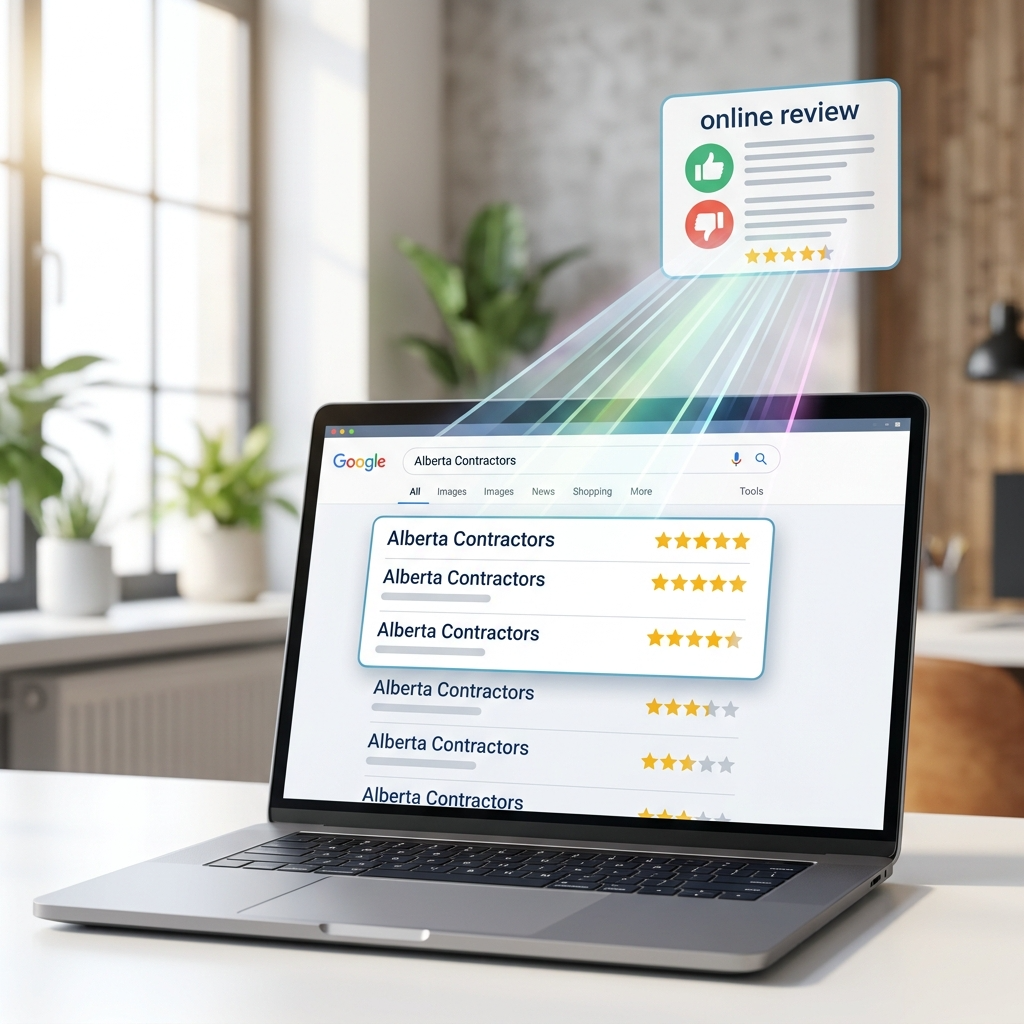
Aggregate rating schema creates rich snippet visibility. When properly implemented, structured data tells search engines exactly how to display your star rating in search results. These visual elements significantly increase click-through rates compared to plain text listings.
Review schema markup best practices for home service websites include proper formatting, accurate data representation, and regular updates. Your schema should reflect your actual review data without exaggeration or manipulation, as Google penalties for schema abuse can severely damage rankings.
Star ratings in search results increase organic click-through rates by 20 to 35 percent according to industry studies. This visual trust signal helps potential customers make quick decisions about which contractor to contact, giving you a competitive advantage in crowded search results.
Technical Implementation for Maximum SEO Impact
Proper JSON-LD formatting for review structured data ensures search engines can read and display your ratings correctly. This code should appear in your website’s header or footer and include aggregate rating information, individual review details when appropriate, and accurate business information.
Review markup compliance with Google’s guidelines is essential. Google regularly updates its structured data requirements and penalizes websites that manipulate schema or include false information. Regular audits ensure your markup remains compliant and effective.
Testing and validation using Google’s Rich Results Test confirms your schema implementation works correctly. This free tool shows exactly how Google interprets your structured data and identifies errors that might prevent rich snippets from appearing in search results.
Building a Sustainable Review Generation System
Service excellence processes naturally generate positive reviews. The foundation of reputation management is consistently delivering quality work. No review generation system can overcome poor service, but excellent service combined with systematic review requests creates steady feedback growth.
Training field teams on review acquisition importance ensures everyone understands their role. Technicians and installers should know how to set customer expectations, explain the review process, and create experiences worth writing about. When your team sees reviews as performance feedback rather than management surveillance, engagement improves.
Review escalation protocols protect your reputation. Your team needs clear procedures for handling situations that might generate negative reviews. Addressing customer concerns before they reach online platforms prevents reputation damage and often turns potential detractors into satisfied customers.
Incentive Strategies That Comply with Platform Guidelines
Ethical approaches to encouraging customer feedback avoid direct payment or compensation. You can thank customers for leaving reviews, but offering money, discounts, or gifts specifically for reviews violates most platform policies and can result in review removal or account suspension.
Contractors cannot offer rewards contingent on positive reviews. Asking for honest feedback is acceptable; asking specifically for five-star reviews or offering incentives only for positive feedback violates guidelines. Your review generation must focus on making it easy for satisfied customers to share their experiences.
Building review generation into standard operating procedures makes it systematic. When requesting reviews becomes part of your normal service completion process, it happens consistently without requiring special effort or attention. This consistency produces the steady review flow that search engines reward.
Measuring Reputation Management Impact on SEO Performance

Key metrics for tracking reputation-related SEO improvements include local pack rankings, organic traffic from local searches, conversion rates from search visits, and correlation between review volume and lead generation. Track these metrics monthly to understand how reputation efforts affect business results.
Correlating review growth with organic traffic and lead generation reveals ROI. Most Alberta contractors see measurable traffic increases within 30 to 60 days of implementing systematic review generation. Leading indicators include improved click-through rates from search results and increased phone calls from organic visitors.
Analytics identify which review platforms drive the most SEO value. Google Analytics shows referral traffic from review sites, while ranking tracking tools show correlation between multi-platform review presence and search visibility. This data helps prioritize which platforms deserve the most attention.
Competitive Reputation Analysis in Alberta Markets
Benchmarking your review profile against local competitors reveals opportunities. If competitors in Calgary or Edmonton have significantly more reviews or higher ratings, you face an uphill battle for visibility. Understanding this gap helps you set realistic improvement goals and timelines.
Reputation gaps affect market share in competitive niches. In saturated markets like HVAC or plumbing in major Alberta cities, the difference between market leaders and everyone else often comes down to reputation profile strength. Closing these gaps requires sustained effort but produces measurable business growth.
Strategic planning for review acquisition in competitive niches focuses on differentiation. If you cannot quickly match competitor review volume, focus on review quality, response rate, and recency. Recent five-star reviews with detailed customer stories often outperform larger volumes of brief, old feedback.
Integrating Reputation Management with Answer Engine Optimization

AI-powered answer engines interpret and surface review data differently than traditional search. ChatGPT, Google’s AI Overviews, and similar tools use review content to answer questions about contractor quality, common issues, and customer satisfaction. These systems quote reviews directly when providing recommendations.
Optimizing review content for voice search and conversational queries means encouraging detailed feedback. Brief “great service” reviews provide minimal value for answer engines. Reviews that describe specific problems solved, techniques used, and outcomes achieved create content that AI systems can cite when answering detailed questions.
Featured snippet opportunities through review excellence position your business as the authoritative answer. When your reviews consistently mention the same strengths, address common concerns, and use natural language, search engines and answer engines treat your business as the expert source for those topics.
Frequently Asked Questions
How many reviews do home service contractors in Alberta need to rank well in local search?
Most competitive markets require at least 25 to 50 recent reviews to rank in the local three-pack. However, review quality and recency matter more than raw numbers. A contractor with 30 five-star reviews from the past six months typically outranks one with 100 mixed reviews from two years ago. Focus on consistent review generation rather than hitting a specific number.
Can negative reviews actually hurt my SEO rankings?
Yes, negative reviews directly impact local search rankings. Google’s algorithm considers both review quantity and quality. Businesses with average ratings below 4.0 stars face ranking disadvantages in competitive markets. More importantly, negative reviews reduce click-through rates even when you do rank well. However, a few negative reviews among many positive ones can actually increase trust by making your profile look authentic.
How quickly do new reviews impact my search engine visibility?
Google typically indexes new reviews within 24 to 48 hours. You may see ranking impacts within one to two weeks as the algorithm processes the updated signals. However, sustainable ranking improvements require consistent review generation over several months. A sudden spike of reviews might trigger temporary algorithmic skepticism, while steady growth produces reliable visibility gains.
What should I include in my responses to customer reviews for SEO purposes?
Include your business name, relevant service keywords, and location references naturally. Thank the customer by name when possible, mention the specific service they received, and reinforce your area coverage. For example: “Thanks for trusting our Calgary plumbing team with your emergency drain repair. We appreciate customers like you.” Keep responses genuine and helpful rather than keyword-stuffed.
Do reviews on third-party platforms like HomeStars affect my Google rankings?
Third-party reviews do not directly influence Google rankings the way Google Business Profile reviews do. However, they contribute to your overall online reputation and domain authority. These platforms often rank well in search results themselves, providing additional visibility opportunities. Multi-platform presence also builds trust with potential customers who research contractors across several sites before deciding.
How can I ethically encourage customers to leave reviews without violating platform policies?
Ask all satisfied customers for honest feedback, making it easy by providing direct links to your review profiles. Send polite requests via email or text shortly after service completion. Never offer compensation, incentives, or rewards specifically for reviews. You can express appreciation after someone leaves a review, but the request should not promise anything in return. Train your team to naturally mention during service that customer feedback helps your business grow.
What is the connection between review star ratings and Google Business Profile ranking?
Google Business Profile rankings factor in review signals including rating average, review quantity, review recency, and review velocity. Businesses with higher ratings and consistent recent reviews generally rank better in local pack results. However, reviews are one of many ranking factors alongside relevance, distance, and prominence. A contractor with excellent reviews but poor website optimization may still lose rankings to a competitor with slightly fewer reviews but stronger overall SEO.