
Building a website that attracts customers and generates leads is critical for home service contractors in Alberta. A well-optimized site serves as your digital storefront, working around the clock to connect you with homeowners searching for plumbing, HVAC, electrical, roofing, and other trades services. In Alberta’s competitive contractor market, having a strong online presence separates thriving businesses from those struggling to find their next job. This guide walks you through the essential steps to create a website that ranks well in search engines and converts visitors into paying customers.
Why Home Service Contractors Need SEO-Optimized Websites
Alberta’s home service market is crowded with talented contractors, but most homeowners find their service providers through Google search. When your website lacks proper optimization, you lose qualified leads to competitors who appear at the top of search results. Studies show that 75% of users never scroll past the first page of search results, meaning invisible websites miss out on the majority of potential customers.
Contractors without SEO-optimized websites face several challenges. First, homeowners searching for services in Calgary or Edmonton neighborhoods won’t discover your business. Second, poorly designed websites create distrust, causing visitors to leave within seconds. Third, slow loading times and confusing navigation frustrate users who quickly move on to better options. Your website performance directly impacts where you appear in local search rankings, which determines how many leads you generate each month.
In Alberta’s trades market, the connection between website quality and business growth is clear. Contractors with fast, mobile-friendly, and locally optimized websites consistently outperform competitors still relying on outdated digital strategies. Your website is the foundation of your entire digital presence, influencing everything from Google Business Profile rankings to social media effectiveness. Getting this foundation right means more calls, more bookings, and more revenue for your contracting business.
Essential Elements of a High-Converting Contractor Website

A high-converting contractor website combines design, functionality, and strategic elements that guide visitors toward taking action. Each component serves a specific purpose in building trust and reducing friction between initial interest and final booking. Understanding these core elements helps you create a website that works as hard as you do.
Fast Loading Speed and Mobile Responsiveness
Page speed directly impacts your bottom line because slow websites lose customers before they even see your services. Research indicates that 53% of mobile users abandon sites that take longer than three seconds to load. For Alberta contractors serving homeowners who need immediate help with emergencies or seasonal projects, every second counts. Fast loading speeds keep potential customers engaged while slow sites send them straight to your competitors.
Mobile responsiveness is no longer optional for contractor websites. More than 60% of homeowners search for local services on smartphones, often while standing in their flooded basement or looking at a broken furnace. Your website must display perfectly on phones, tablets, and desktops without requiring users to pinch, zoom, or scroll horizontally. Mobile-first design ensures that busy Alberta homeowners can easily view your services, read reviews, and contact you regardless of which device they’re using.
Improving Core Web Vitals requires attention to technical details that affect user experience. Compress images without losing quality, minimize code, enable browser caching, and choose quality hosting providers. These optimizations may seem invisible to users, but they dramatically improve how quickly your pages load and how smoothly they function. Google prioritizes websites with excellent Core Web Vitals, giving you a ranking advantage over competitors who ignore these technical factors.
Clear Call-to-Action Placement and Lead Capture Forms
Strategic positioning of contact forms, phone numbers, and booking buttons transforms casual browsers into paying customers. Your most important calls-to-action should appear above the fold on every page, making it effortless for visitors to reach out. Place your phone number in the header where it’s always visible, add contact forms at the end of service descriptions, and include booking buttons that stand out with contrasting colors. Alberta homeowners appreciate websites that make contacting contractors quick and straightforward.
Reducing friction in your conversion funnel means removing obstacles between interest and action. Long forms with unnecessary fields discourage submissions, so only ask for essential information like name, phone number, and service needed. Offer multiple contact methods including phone calls, text messages, email forms, and live chat to accommodate different communication preferences. Make your forms work on mobile devices without frustrating tiny text fields or unresponsive buttons.
Testing different CTA placements and messaging helps you understand what resonates with your specific audience. Try button colors, text variations, and form lengths to see what generates the most conversions. Alberta contractors often find that direct language like “Get Your Free Quote” or “Call Now for Same-Day Service” outperforms vague phrases. Track which pages generate the most leads and replicate successful elements across your entire website.
Trust Signals and Social Proof Integration
Displaying customer reviews, certifications, and testimonials builds immediate credibility with skeptical homeowners. Most people read online reviews before choosing a contractor, making social proof one of your most powerful conversion tools. Feature recent five-star reviews prominently on your homepage and service pages. Include customer names and locations when possible to make testimonials feel authentic rather than fabricated.
Trust badges and industry affiliations demonstrate your professionalism and commitment to quality work. Display logos for organizations like the Better Business Bureau, trade associations, manufacturer certifications, and insurance providers. Show licenses, bonding information, and warranties that protect customers. These signals reassure Alberta homeowners that you’re a legitimate, qualified professional rather than a fly-by-night operation.
Showcasing before-and-after project galleries lets your work speak for itself. High-quality photos of completed projects demonstrate your expertise better than any written description. Organize galleries by service type so visitors can easily find examples relevant to their needs. Include brief descriptions explaining the challenge, your solution, and the results. Visual proof of your capabilities converts uncertain visitors into confident customers ready to book your services.
Local SEO Integration for Alberta Home Service Markets
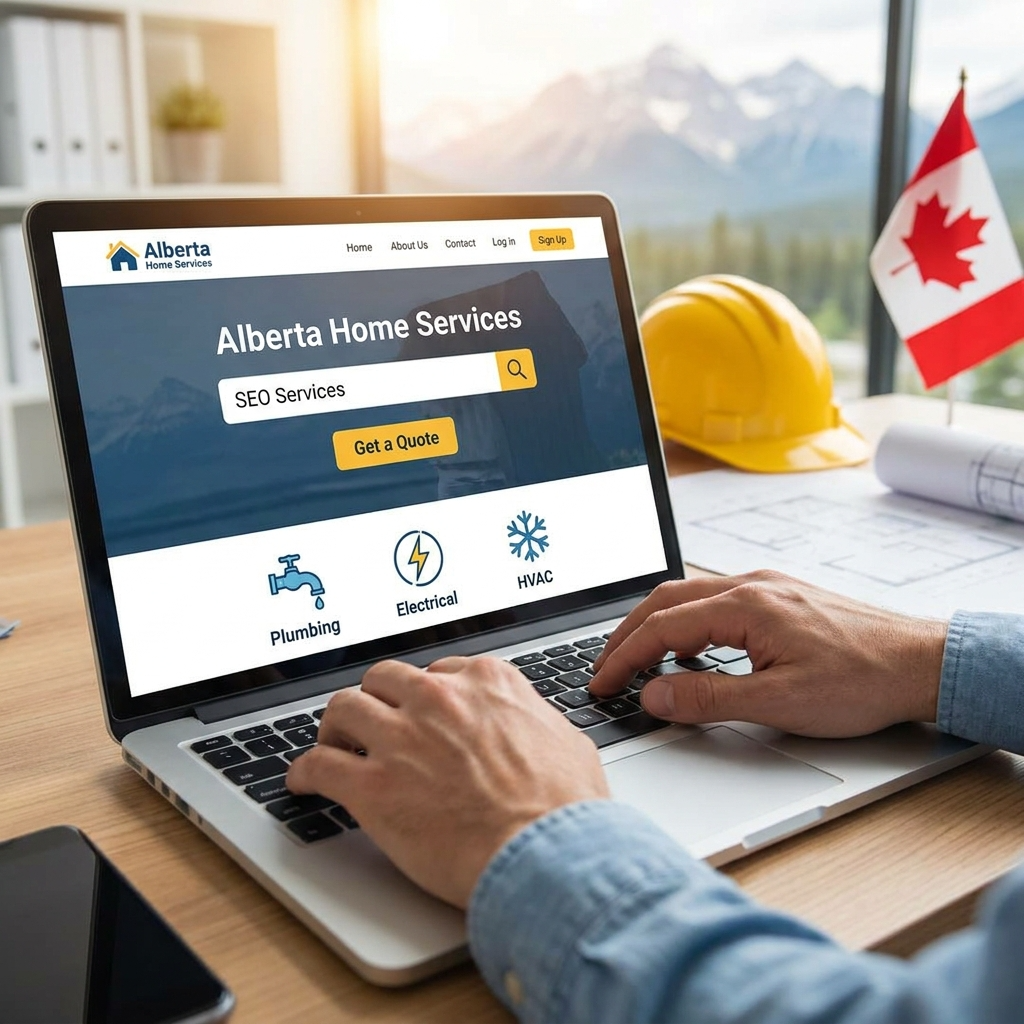
Local SEO strategies help your contractor website dominate search results in specific Alberta neighborhoods and cities. Embedding location-specific optimization throughout your site signals to Google exactly where you operate and who you serve. This geographic focus is crucial for home service contractors because customers always search for providers near them.
Location Pages Targeting Calgary, Edmonton, and Surrounding Areas
Creating dedicated service area pages maximizes your visibility in each community you serve. Build individual pages for Calgary neighborhoods like Beltline, Kensington, and Inglewood, as well as Edmonton areas like Whyte Avenue, Old Strathcona, and Jasper Avenue. Each location page should include unique content discussing local considerations, community-specific services, and relevant geographic keywords. This approach helps you rank for searches like “plumber in Kensington” or “HVAC repair in Old Strathcona.”
Optimizing location content requires more than just inserting city names into generic text. Research neighborhood-specific keywords that homeowners actually use when searching for contractors. Mention local landmarks, discuss common issues in specific areas (like older homes in mature neighborhoods), and reference community characteristics. This detailed local focus signals expertise and relevance to both search engines and potential customers.
Structuring URLs and navigation for geographic targeting improves user experience and search rankings. Use clean URL structures like “yoursite.com/services/plumbing/calgary” rather than confusing strings of numbers and symbols. Create logical navigation menus that let visitors easily find their location. Implement breadcrumb navigation showing the path from homepage to specific service to location, helping both users and search engines understand your site organization.
Embedding Google Business Profile and Local Citations
Seamless integration of your business profile information across website pages reinforces your local presence. Display your business name, address, and phone number (NAP) consistently in your footer, contact page, and location pages. Embed your Google Business Profile directly on your contact page so visitors can see your reviews, hours, and map location without leaving your site. This integration builds trust while strengthening local search signals.
NAP consistency is critical for local search authority because conflicting information confuses search engines. Ensure your business name, address, and phone number match exactly across your website, Google Business Profile, and online directories. Even small variations like “Street” versus “St.” can create problems. Regular audits help catch and correct inconsistencies that might be hurting your local rankings.
Leveraging map embeds and service area descriptions helps homeowners quickly understand if you serve their location. Add interactive maps showing your coverage areas across Alberta, making it visually clear which neighborhoods you serve. Include driving time estimates from major landmarks or list specific postal codes you cover. Clear service area information prevents wasted time for both you and customers outside your region.
Content Architecture That Drives Organic Traffic

Building a website structure that supports long-term SEO growth requires strategic planning of how content is organized and interconnected. Smart architecture makes it easy for search engines to crawl your site while helping visitors quickly find information they need. This foundation determines how effectively your website attracts and converts organic traffic.
Service Pages Optimized for Transactional Intent
Crafting service pages that answer customer questions and drive bookings requires understanding homeowner intent. When someone searches for “furnace repair Calgary,” they want clear information about your services, pricing guidance, response times, and an easy way to book. Structure each service page to address these needs immediately. Lead with a clear description of what you do, follow with benefits, address common concerns, and end with strong calls-to-action.
Keyword mapping for specific trades services ensures each page targets the right search terms. Create separate pages for distinct services rather than lumping everything together. A plumbing contractor should have individual pages for drain cleaning, pipe repair, water heater installation, and leak detection. Map primary and secondary keywords to each page, using them naturally in headings, body text, and image descriptions without awkward repetition.
Using persuasive copywriting techniques tailored to homeowner pain points transforms service pages into conversion machines. Address the stress, inconvenience, and concerns that bring customers to your site. For emergency services, emphasize fast response times and 24/7 availability. For renovation projects, highlight quality craftsmanship and attention to detail. Speak directly to your ideal customer’s situation, showing you understand their needs and have the perfect solution.
Blog and Resource Hub for Educational Content
Establishing topical authority through helpful contractor-focused content positions you as the go-to expert in your field. Regular blog posts answering common homeowner questions build trust while attracting organic traffic. Write guides about choosing the right contractor, preparing for service appointments, understanding common problems, and maintaining home systems. Educational content brings visitors to your site before they’re ready to buy, keeping your business top-of-mind when they need services.
Creating content clusters around seasonal demand cycles in Alberta maximizes relevance throughout the year. Publish furnace maintenance content in fall when homeowners prepare for winter, air conditioning tips in spring, and weatherproofing advice before extreme temperature seasons. Address Alberta-specific concerns like protecting pipes from freezing, managing ice dams, and handling extreme temperature fluctuations. Seasonal content attracts high-intent traffic exactly when people need your services most.
Balancing informational and commercial content creates full-funnel engagement that nurtures leads over time. Not every blog post should be a sales pitch. Mix educational articles that build authority with service-focused content that drives immediate bookings. Create resource pages, checklists, maintenance schedules, and problem-solving guides that provide genuine value. This balanced approach builds goodwill and trust that eventually converts into paying customers.
Technical SEO Foundations for Contractor Websites

Behind-the-scenes optimizations that search engines prioritize often get overlooked by contractors focused on visible design elements. Technical SEO ensures search engines can find, crawl, understand, and rank your website effectively. Getting these foundations right prevents technical issues from sabotaging your other optimization efforts.
Proper URL Structure and Site Navigation
Creating logical, crawlable site architecture helps search engines understand your website organization. Use a simple hierarchy where main service categories branch into specific services, which then branch into location pages when relevant. Avoid burying important pages more than three clicks from your homepage. Clear architecture benefits users navigating your site and search engines determining which pages matter most.
Implementing breadcrumb navigation improves user experience while providing additional internal linking. Breadcrumbs show visitors their location within your site structure, making it easy to move up to broader categories. They also give search engines additional context about page relationships. Add breadcrumbs near the top of each page using schema markup that helps search results display navigation paths.
URL naming conventions should support keyword targeting while remaining readable. Use descriptive URLs like “yoursite.com/services/electrical/panel-upgrades” instead of “yoursite.com/page?id=1234.” Keep URLs short, use hyphens to separate words, and include relevant keywords naturally. Avoid changing URLs after pages are published because broken links hurt SEO and frustrate users.
XML Sitemaps and Robots.txt Configuration
Ensuring search engines can discover and index all important pages requires proper sitemap submission. Generate an XML sitemap listing every page you want indexed, then submit it through Google Search Console. Update your sitemap automatically when adding new content so search engines find new pages quickly. This simple step dramatically improves crawl efficiency, especially for larger contractor websites with many service and location pages.
Managing crawl budget prevents search engines from wasting time on unimportant pages. Use your robots.txt file to block crawlers from accessing admin areas, duplicate content, and low-value pages. This focuses crawling efforts on pages that actually matter for your business. Regularly check Google Search Console to identify crawl errors and fix issues preventing proper indexation.
Avoiding common technical pitfalls saves contractor websites from preventable SEO problems. Never block CSS or JavaScript files that search engines need to render your pages properly. Fix redirect chains and loops that confuse crawlers. Eliminate duplicate content by using canonical tags to specify preferred versions of similar pages. These technical details might seem minor but collectively make a huge difference in search performance.
SSL Certificates and Website Security
HTTPS is non-negotiable for modern contractor websites because Google considers it a ranking factor and browsers flag unsecured sites as dangerous. Installing an SSL certificate encrypts data transmitted between your website and visitors, protecting sensitive information like contact details and payment data. The small padlock icon in browsers reassures visitors that your site is safe, building trust that improves conversion rates.
Building customer trust through visible security indicators goes beyond just having HTTPS. Display security badges from recognized providers, show certifications, and include privacy policy links in your footer. When collecting customer information through forms, explain how you’ll use it and that you won’t share it with third parties. These transparency measures reduce anxiety about submitting personal details.
Protecting lead information and payment processing is both a legal requirement and ethical responsibility. If you process payments online, use PCI-compliant systems that meet industry security standards. Regularly update your website platform, plugins, and themes to patch security vulnerabilities. Implement strong passwords, two-factor authentication, and regular backups. Security breaches damage your reputation and can result in significant financial and legal consequences.
Conversion Rate Optimization Tactics for Home Service Sites

Turning website visitors into paying customers requires strategic optimization that removes friction and encourages action. Conversion rate optimization focuses on improving the percentage of visitors who contact you, request quotes, or book services. Small improvements in conversion rates can dramatically increase revenue without needing more traffic.
Click-to-Call Functionality and Contact Options
Making it effortless for Alberta homeowners to reach contractors starts with prominent click-to-call buttons on mobile devices. When someone taps your phone number on a smartphone, it should immediately initiate a call without requiring them to copy and paste. Place your phone number in the header of every page, make it large enough to tap easily, and use contrasting colors that draw attention. Many homeowners prefer calling over filling out forms, especially for urgent problems.
Implementing tracking for phone calls and form submissions helps you measure marketing effectiveness and ROI. Use call tracking numbers that forward to your main line while recording which marketing channels generate calls. Set up conversion tracking in Google Analytics to monitor form submissions, calculate conversion rates, and identify your most valuable traffic sources. This data guides optimization decisions and marketing budget allocation.
Offering multiple contact methods accommodates different user preferences and situations. Some people prefer calling, others like texting, and many want to submit forms and wait for callbacks. Provide phone numbers, text messaging options, email forms, live chat, and even social media messaging. The easier you make it to contact you, the more leads you’ll capture from visitors who might otherwise bounce to competitors.
Service Area Maps and Availability Indicators
Visual representations of coverage areas across Alberta help homeowners immediately know if you serve their location. Create interactive maps showing neighborhoods, cities, and regions where you operate. Color-code areas based on service tiers like primary service zones, extended coverage areas, and trip-charge regions. Maps eliminate confusion and prevent time-wasting inquiries from locations you don’t serve.
Real-time booking calendars and availability displays reduce back-and-forth communication. When appropriate for your business model, show available appointment slots that customers can book directly. Display current wait times for emergency services or estimated response times for service calls. Transparency about availability helps customers plan while demonstrating high demand for your services.
Setting proper customer expectations reduces friction and prevents misunderstandings. Clearly state your service hours, emergency availability, typical response times, and booking processes. Explain what happens after someone submits a form or calls your number. When customers know what to expect, they feel more comfortable moving forward with booking your services.
Integrating AI and Automation into Contractor Websites
Leveraging advanced technology gives contractors a competitive advantage by improving efficiency and capturing more leads. AI and automation tools handle routine tasks, qualify prospects, and personalize experiences at scale. These technologies are becoming standard rather than optional for forward-thinking home service businesses.
Chatbots and Voice Automation for 24/7 Lead Capture
Implementing intelligent chatbots that qualify leads automatically ensures you never miss opportunities outside business hours. Modern chatbots can answer common questions, collect contact information, schedule appointments, and route urgent requests appropriately. When a homeowner visits your site at midnight with a plumbing emergency, a chatbot can gather details and notify you immediately rather than waiting until morning.
Voice automation systems handle phone inquiries when you’re busy or unavailable. These systems can provide business information, take messages, schedule callbacks, and even dispatch technicians for emergencies. Unlike simple voicemail, voice automation interacts with callers, answers basic questions, and ensures every call gets appropriate attention. This technology prevents lost leads from unanswered phones during peak times.
CRM integration enables seamless lead management by automatically adding chatbot and voice automation captures into your customer database. This integration ensures no leads fall through cracks and enables automated follow-up sequences. Track every interaction, set reminders for callbacks, and analyze which sources generate the highest-quality leads. Automation handles administrative tasks so you can focus on delivering excellent service.
AI-Powered Content Personalization
Dynamically adjusting website content based on visitor behavior creates more relevant experiences that boost conversions. AI can detect whether visitors are repeat customers or new prospects, which services they’re interested in, and what stage of the buying process they’re in. Show different content, offers, and messages to different visitor segments for maximum relevance.
Personalized service recommendations increase conversion rates by showing visitors exactly what they need. If someone views your furnace repair page multiple times, highlight furnace services in banners when they return. If they’re browsing multiple HVAC services, suggest comprehensive maintenance packages. Smart recommendations feel helpful rather than pushy, guiding customers toward appropriate solutions.
Predictive analytics optimize user journeys by identifying patterns in successful conversions. Analyze which page paths lead to bookings, which content keeps visitors engaged longest, and which exit points lose the most potential customers. Use these insights to restructure navigation, adjust content placement, and fix friction points. Continuous optimization based on real behavior data compounds improvements over time.
Measuring Website Performance and ROI

Tracking metrics that matter helps home service contractors make data-driven decisions about website optimization and marketing investments. Without proper measurement, you’re operating blind, unable to identify what works and what wastes money. Setting up comprehensive tracking transforms your website from an expense into a measurable asset.
Setting Up Google Analytics and Conversion Tracking
Essential KPIs for contractor websites include traffic volume, traffic sources, bounce rate, time on site, pages per session, and conversion rates. Track how many visitors come from organic search, Google Business Profile, paid ads, and referrals. Monitor which pages get the most views and where visitors exit. Understanding these metrics reveals opportunities for improvement and validates optimization efforts.
Goal configuration for calls, forms, and bookings transforms analytics from interesting data into actionable business intelligence. Set up conversion tracking for every important action like phone calls, form submissions, chat conversations, and online bookings. Assign values to different conversion types based on their typical revenue. This tracking shows exactly which marketing channels and website pages generate the most valuable leads.
Analyzing traffic sources helps optimize marketing spend by revealing which investments deliver the best returns. If organic search generates most of your high-quality leads, invest more in SEO. If paid ads produce expensive leads that rarely convert, reduce those budgets. Compare cost per lead across channels to allocate resources strategically. Regular analysis prevents wasting money on ineffective marketing while doubling down on what works.
Heatmaps and User Behavior Analysis
Understanding how visitors interact with website elements reveals problems invisible in standard analytics. Heatmap tools show where users click, how far they scroll, and which elements they ignore. This visual data highlights whether your most important content and calls-to-action actually get attention. You might discover that your contact form sits below where most visitors stop scrolling or that users click non-clickable elements expecting them to be links.
Identifying friction points that prevent conversions helps you remove obstacles between interest and action. Session recordings show exactly how individual visitors navigate your site, revealing confusing navigation, broken elements, and moments of hesitation. Watch recordings of sessions that didn’t convert to understand why visitors left without contacting you. These insights are more valuable than guessing about user behavior.
Data-driven decisions for continuous website improvement compound over time into significant performance gains. Test one change at a time so you can measure its impact accurately. Implement improvements based on user behavior data rather than personal preferences or design trends. Small optimizations like moving a contact form higher, simplifying navigation, or rewriting confusing headlines can each increase conversion rates by meaningful percentages.
Common Website Mistakes Alberta Contractors Must Avoid
Pitfalls that undermine SEO performance and lead generation cost contractors opportunities and revenue. Many common mistakes are easy to avoid once you know what to watch for. Learning from others’ errors saves time, money, and frustration while accelerating your website’s success.
Outdated design trends hurt credibility and conversions by making your business appear unprofessional or neglectful. Websites with flash animations, auto-playing music, or mid-2000s aesthetics signal to visitors that you’re behind the times. Modern web design emphasizes clean layouts, plenty of white space, readable fonts, and intuitive navigation. If your website looks like it hasn’t been updated in a decade, homeowners question whether your contracting skills are equally outdated.
Neglecting website maintenance and regular content updates tells search engines your site is stale and potentially abandoned. Add new blog posts regularly, update service pages with current information, refresh outdated statistics, and fix broken links promptly. Check your website monthly for technical issues, security vulnerabilities, and outdated content. Active maintenance signals to both search engines and visitors that your business is thriving and attentive.
Poor hosting choices slow down site performance, creating frustrated visitors and lower search rankings. Budget hosting services often oversell server resources, resulting in slow loading times during peak traffic. Cheap hosting may also have poor security, limited support, and frequent downtime. Invest in quality hosting from reputable providers who specialize in business websites. The cost difference is minimal compared to lost revenue from a slow or frequently offline website.
Failing to optimize for local search algorithms means missing opportunities right in your service area. Many contractors build generic websites that could serve any location, missing chances to rank for local searches. Include location-specific content, claim and optimize your Google Business Profile, build local citations, and earn reviews from Alberta customers. Local optimization is especially important for home service contractors because customers always search for nearby providers.
FAQ
What makes a contractor website high-converting in Alberta’s market?
A high-converting contractor website combines fast loading speeds, mobile responsiveness, clear calls-to-action, trust signals like reviews and certifications, local SEO optimization, and content that addresses Alberta homeowner needs. The site must make contacting you effortless while building credibility through social proof and professional design. Conversion rates improve when websites remove friction, answer common questions, and guide visitors toward booking services.
How long does it take to see SEO results from a new contractor website?
Most contractors start seeing initial SEO results within 3-6 months after launching an optimized website. Local search rankings often improve faster than broader organic results, especially when combined with Google Business Profile optimization. Competitive keywords in major markets like Calgary and Edmonton may take 6-12 months to rank well. Consistent content creation, ongoing optimization, and quality backlinks accelerate results over time.
Should home service contractors use website templates or custom designs?
Quality templates can work well for contractors on limited budgets, provided they’re customized with your branding, content, and local optimization. Custom designs offer more flexibility and unique features but cost significantly more. The most important factors are mobile responsiveness, fast loading speeds, clear navigation, and proper SEO implementation. A well-optimized template outperforms a poorly executed custom design. Choose based on your budget, timeline, and specific needs.
What is the ideal website structure for multi-service contractors?
Multi-service contractors should organize websites with main service categories in the top navigation, individual service pages for each offering, and location pages for different coverage areas. Create clear hierarchies like Services > Plumbing > Drain Cleaning > Calgary. Include a homepage highlighting your full range of services, an about page building trust, a contact page with multiple options, and a blog for educational content. This structure helps both users and search engines understand your complete offerings.
How much should Alberta contractors budget for an SEO-optimized website?
Professional contractor websites typically range from $3,000-$10,000 for initial development, with custom designs costing $10,000-$25,000 or more. Budget an additional $500-$2,000 monthly for ongoing SEO, content creation, and maintenance. Higher budgets deliver more features, better customization, and faster results. Consider this an investment rather than an expense because a high-converting website generates leads and revenue that far exceed its cost.
Do contractor websites need blogs to rank well locally?
Blogs significantly improve local rankings by building topical authority, attracting backlinks, and targeting long-tail keywords. Regular blog posts answer questions Alberta homeowners search for, bringing visitors who may need services eventually. However, service pages and location pages are more critical for local rankings than blogs. Start with optimized service and location pages, then add blog content to support broader SEO goals and establish expertise.
What role does website hosting play in SEO performance?
Hosting directly impacts loading speeds, uptime, and security, all of which affect SEO rankings. Slow hosting hurts user experience and increases bounce rates, signaling poor quality to search engines. Frequent downtime prevents search engines from crawling your site and frustrates potential customers. Quality hosting provides fast servers, reliable uptime, strong security, and good customer support. Choose hosting specifically designed for business websites rather than basic shared hosting.
Building Your Path to Digital Success
Creating a high-converting SEO website positions your home service contracting business for long-term growth in Alberta’s competitive market. The strategies covered in this guide work together to improve search rankings, attract qualified traffic, and convert visitors into paying customers. Start with technical foundations like fast hosting and mobile responsiveness, layer on local SEO optimization for Alberta markets, create compelling content that answers homeowner questions, and continuously measure and improve performance. Your website should evolve as your business grows, adapting to changing search algorithms, customer expectations, and market conditions. Contractors who invest in proper website optimization consistently outperform competitors still relying on outdated digital strategies, capturing more leads and building stronger businesses.